


Japanese | English
A people-centric management method
designed to achieve sustainable growth,
with deep affinity to Japanese culture.
©FUKUOKA SHINICHI OFFICE, Art Direction:Taku Sato (TSDO Inc.), Movie Direction: Yugo Nakamura (tha ltd.), Programming: Ryota Okawa (tha ltd.), Logotype: Rikako Hayashi (TSDO Inc.)
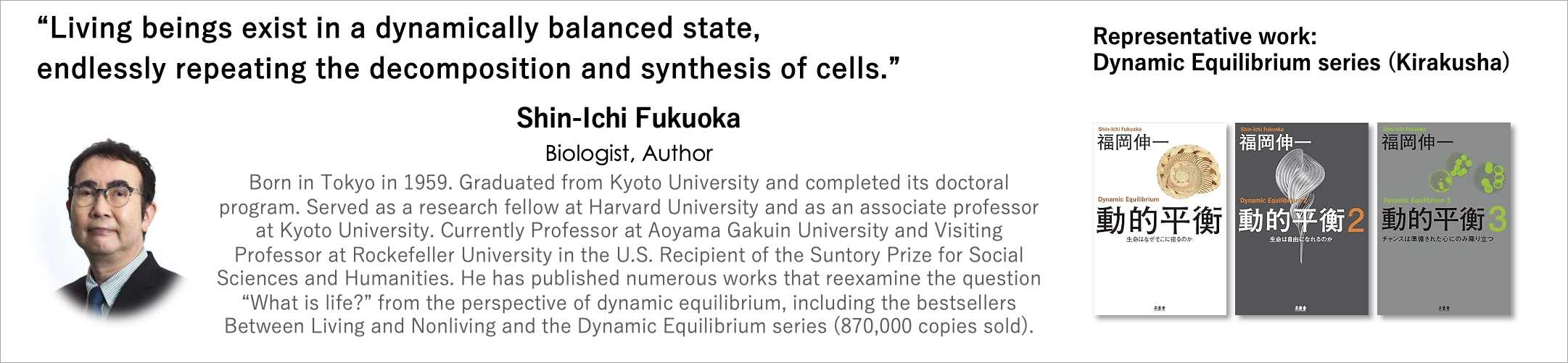
Dynamic Equilibrium
Analogy between Biological Life and Corporate Activity
What is Life?
Cells achieve dynamic equilibrium by demonstrating complementarity,
thereby maintaining their existence as living organisms.
Cells exhibit complementarity with one another, forming a living being.
(As all cells are replaced over a period of years, life resists entropy
caused by rigidity, allowing activities to continue.)
Through the intercellular connections, the activities of life are maintained continuously.
Dynamic Equilibrium Management
Management rooted in a “way of living”
formed by intersubjective formation
Corporate activity, like biological life, is analogous in form;
long-term prosperity can be achieved through dynamic equilibrium centered on people.
The essence of corporate activity is not organizations, functions, or job roles,
but people at the center. Employees are the main actors.
(If employees or organizations become rigid, the company will also decline.)
Through management philosophy that exists between people, individuals express complementarity,
allowing the company to continue evolving in a state of dynamic equilibrium.
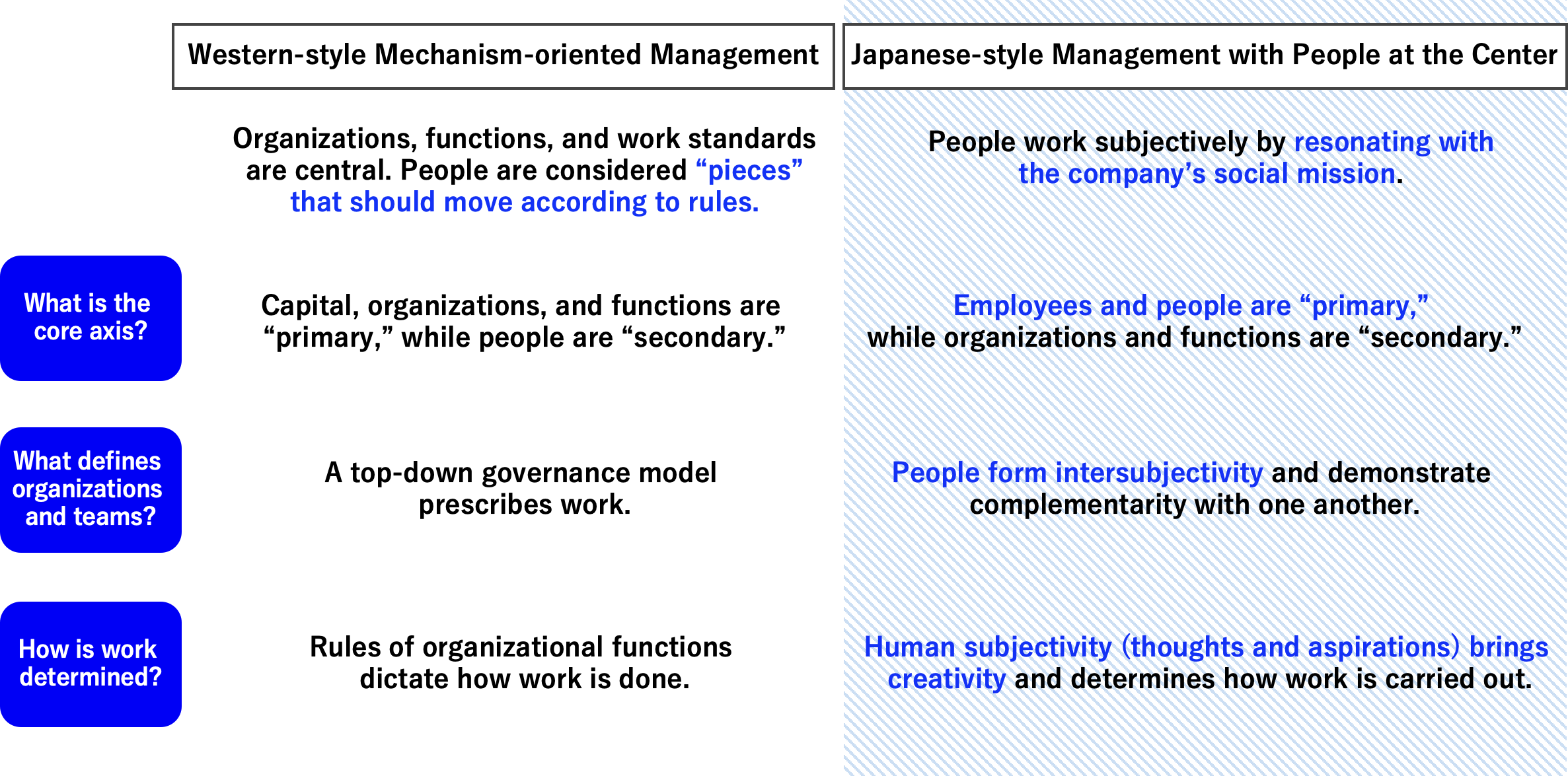
Differences Between Western Management
and Dynamic Equilibrium Management
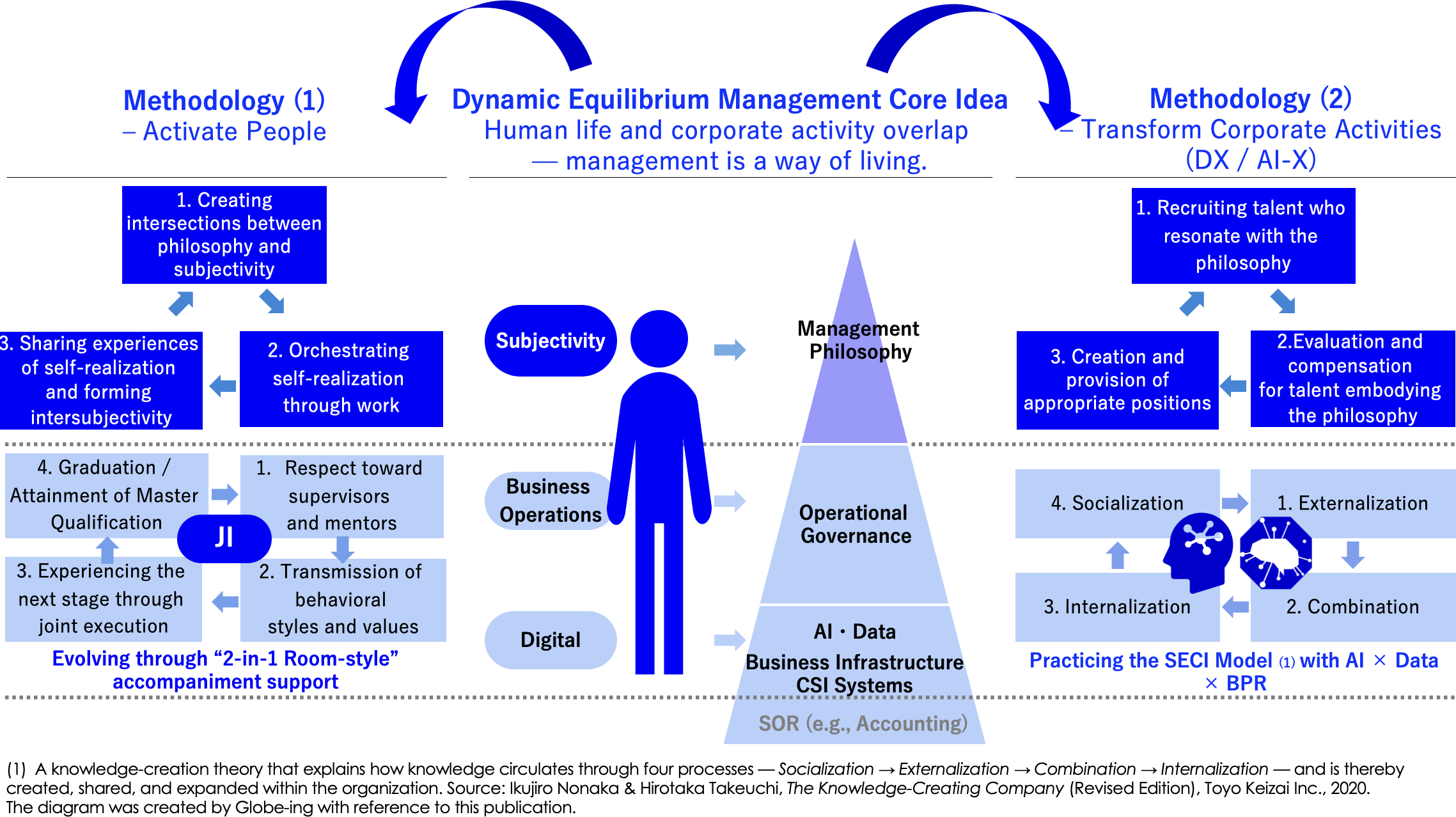
Core Concepts & Methodology of Dynamic Equilibrium Management
Contact
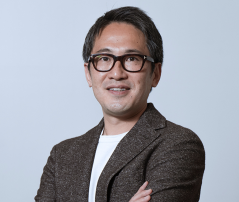
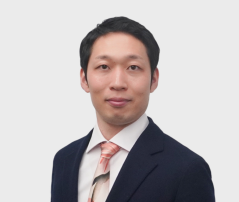
Sosuke Wajima
Board Director,
Head of AI Division
(Founder)
Formerly at a major automotive company; after roles including Managing Director at Accenture Strategy, lead of Transformation Strategy Team at PwC Consulting; currently in his present role.
Takashi Kuwabara
Executive Director
Executive Partner
Previously at Roland Berger, Deloitte Tohmatsu Consulting; now drives both strategy formulation and its realization from both management and field perspectives. Currently promoting AI × Transformation.